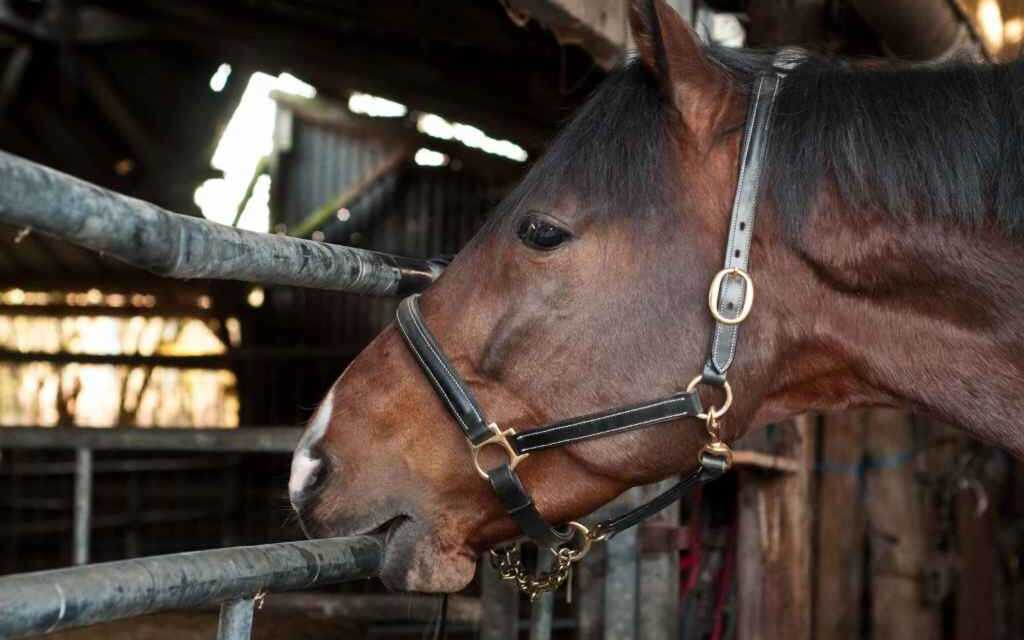
Here are several days that you have noticed that your fences have been attacked. Thinking they were termites or serrated shears, you realize that it is your horses that are eating the wood of your fences.
Faced with this troublesome and unusual behavior of your horses, you wonder about the reasons that led them to adopt such habits. Why does your horse eat wood?
Why do horses chew wood?
Several reasons can lead a horse to eat wood. The most common are:
- Frustration or boredom
- Nutritional deficiencies
- A habit
It is important to know that horses kept in small enclosures, stalls, isolated from other horses, or primarily fed with concentrated feed without enough forage—allowing them to chew for long periods, which is their natural habit—can get bored. So what do they do?
They gnaw on wooden barriers. It is also rare to see a horse eating wood due to vitamin deficiencies. Some horses may adopt this behavior simply because they have observed their companions doing it. It would therefore be wise for you to find a solution to such behaviors in your horse or horses.
What to do when my horse eats wood?
There may be several solutions to prevent the horse from reacting this way. The easiest is to deter it by giving the wood a bad taste. The problem may disappear, but sometimes the behavior persists.
Since dry wood cannot provide minerals or vitamins—being essentially composed of fibers—the dietary cause is suspected when a horse eats wood because it does not have access to forage at will.
A horse may also eat wood due to physical pain. This could be dental pain or other ailments. In this case, a health check by a veterinarian is necessary.
However, if diet and pain are ruled out as causes, it is important to consider the animal’s mental state. Some animals eat wood when faced with unsuitable living conditions.
A horse’s isolation can lead to such a reaction. Likewise, poor company can be equally harmful to an individual’s morale. If this is the case, the horse may end up alone. It is therefore up to you to conduct a case-by-case assessment to find the most suitable solution.