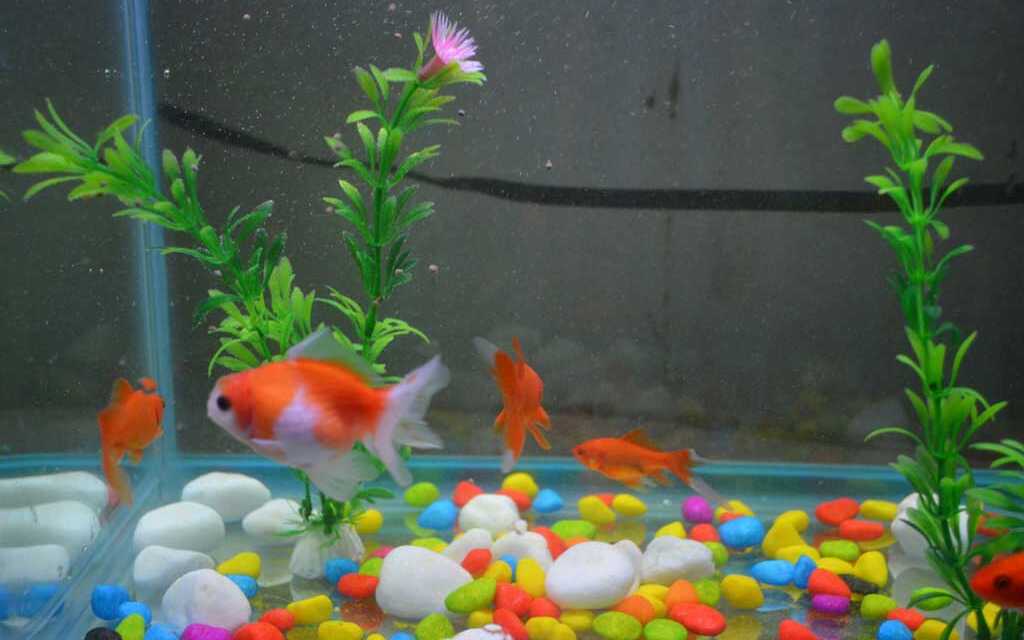
Complete Guide to Aquariums
A tank filled with water where fish or aquatic plants are placed, an aquarium is not just a decorative object. It has positive effects on those who observe it. With ornamental fish in various colors, it allows you to discover an enchanting world while bringing life to your living room or any other space where it is placed.
Whether small or large, a fish aquarium is an object capable of attracting all eyes. Having an aquarium at home means creating a maritime atmosphere in your living room for a better quality of life. You are passionate about fish aquariums and wish to have one in your living room. Be aware that there are several models of fish aquariums. So, browse through our guide for more information.
Tips and Information About Aquariums
Aquaristics
Characterized by the reproduction of an aquatic habitat in an aquarium, aquaristics is a hobby that serves the same purpose as a painting or a photograph. It requires time, some money, and a lot of attention. Aiming to build a biotope, aquaristics also helps in understanding and mastering the rules of nature. It also requires real technical knowledge to maintain an ecological balance in your aquarium. Aquaristics demands flawless technical skills, whether you choose to set up a freshwater, saltwater, cold water, or warm water aquarium.
Types of Aquaristics
Before proceeding with setting up an aquarium, it is essential to determine what type of aquarium might meet your expectations. Note that there are several types of aquariums.
- Freshwater Aquaristics
Easier than a saltwater aquarium, the freshwater aquarium is recommended for beginners to start smoothly. It primarily involves breeding tropical fish. For a freshwater aquarium, which is also a cold water aquarium, the required equipment and fish are less expensive. Its setup requires following certain steps.
First, choose an aquarium that meets the standards for the well-being of your fish. It must be equipped with a system for heating the water, lighting, and filtration. The freshwater aquarium is suitable for cold-water fish. It is also possible to install an air pump. This is not mandatory but could allow good oxygenation of the water and also prevent the water from stagnating. You can therefore opt for a biotope or community freshwater aquarium. As for the size, you can define it according to the number of aquarium goldfish and decorative elements (plants, stones, sand…).
We recommend a rectangular 150-liter tank, whose shape facilitates maintenance and whose size is not too large but still ensures a minimum viable space for a community tank. If you wish to insert plants, it is preferable to wait a few days after filling it with water. Make sure the setup is functioning perfectly and that the water has the right temperature for planting. For a freshwater aquarium, the pH should be around 7 and nitrates at 0.
- Saltwater Aquarium
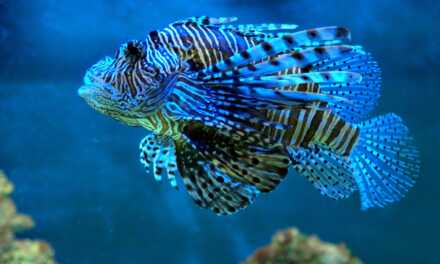
The saltwater aquarium is much more fragile, more expensive, and requires more maintenance than a freshwater aquarium. However, it offers a perfect view, a magnificent display, and brings a small ocean into your living room. For a saltwater aquarium, which is also a cold water aquarium, the reef model is the most recommended. This combines both live rocks and marine fish.
This type of aquarium is designed for cold-water fish. More aesthetic, more natural, and more pleasant, it is an aquarium type reserved only for fish. It contains saltwater, with salt dosed at a very precise concentration (33g/l). There are several types of saltwater aquariums: the mixed aquarium, the fish-only aquarium, and the reef aquarium.
For its setup, you will need a minimum 200-liter aquarium, circulation pumps for sediment, a protein skimmer, a heater to maintain the water at 25°C, a thermometer, a sump, reverse osmosis water free of nitrites, phosphates, and nitrates, lighting suitable for the marine ecosystem, blue-dominant T8 actinic neon lights, and test kits to check various water parameters (magnesium level, calcium, nitrate, pH, etc.).
Whether you want a small or large saltwater aquarium, know that they require the same equipment. Your saltwater aquarium should be installed in an easily accessible location. Avoid exposing it to natural light. It is an installation carried out in several stages.
- Filling the aquarium with water
- Placing the live rocks
- Setting up the décor
- Adding the first detritivores
- Adding the invertebrates
- Adding soft corals
- Adding the fish
- Warm Water Aquarium
The warm water aquarium is intended for warm-water fish that come from tropical regions. These are freshwater fish that live in waters with temperatures between 24 and 26°C, depending on the species. Some can also live between 20 and 29°C. It involves a submersible tube device, which should be plugged in and equipped with a thermostat.
For the installation of a warm water aquarium, you will need a water tank, a filtration system to clean the water mechanically, biologically, and chemically, a heater, and possibly lighting. The heating system, which comes with a temperature regulator, is therefore essential if your goal is to host warm-water fish in your aquarium. The water’s pH should be neutral, around 7. Warm-water aquarium fish include Guppies, Bettas, Angelfish, Neon Tetras, etc.
- The Amazonian Aquarium
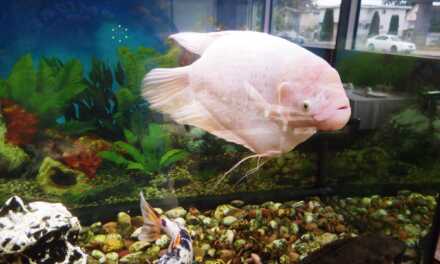
The Amazonian aquarium is a biotope that is 100% Amazonian. It is easy to set up because it offers the widest selection of fish and plants for an aquarium. You can therefore populate your aquarium with a large variety of fish with different colors, behaviors, and shapes depending on the species.
The Amazonian aquarium consists of many roots for decoration, softened water using reverse osmosis water, which is slightly tinted. It offers the fish an environment similar to their natural habitat. These fish come from the Amazon basin. The various species of the Amazonian aquarium require more space. So, you will need a large-volume aquarium of at least 300 liters. Amazonian species include large cichlids.
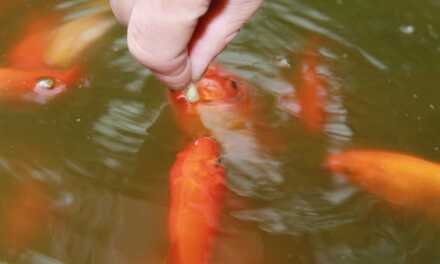
What Aquarium is Suitable for a Goldfish?
A bowl-shaped aquarium is not recommended for goldfish. Because, a bowl is not a real aquarium. Its space is not suitable for keeping a fish. A goldfish in an aquarium needs more space to thrive. Giving it a small living space exposes it to disease and stress. A bowl-shaped aquarium will not allow you to install plants and other natural elements to turn the space into a natural environment.
The right aquarium for a goldfish is one that suits the number and size of the desired goldfish. It is an aquarium that allows the fish to grow quickly. That is, a small aquarium for a small fish. Goldfish need enough space to move freely. You can have two small goldfish in 100 liters of water. The larger the aquarium, the easier it is to maintain and the faster it will reach a biological balance. For example:
- For a 15-liter aquarium: it will be impossible to opt for just any fish. This type of aquarium is more suited for small invertebrates, like crayfish or shrimp.
- For a 20-liter aquarium: this type of aquarium is more suitable for small killifish (aphyosemion). It’s an aquarium that should be covered. For feeding these fish, live food or sometimes frozen food is recommended.
- For a 60-liter aquarium: it is an aquarium where you can opt for several species, such as: Betta splendens, Galaxy Rasbora, Boraras brigittae, Barred killifish, snails, or shrimp.
Which Plants for a Cold-Water Aquarium?
The choice of plants for a cold-water aquarium depends on several criteria. You can opt for plants that can adapt to different water temperatures, meaning a warm or cold-water aquarium, plants that require minimal fertilization, and fast-growing plants. Such as:
– Dwarf or carpeting aquarium plants
- Sagittaria subulata: carpeting plant, fast-growing
- Anubias nana: small, fast-growing plant
- Lilaeopsis brasiliensis, false tenellus: carpeting plant, slow-growing
– Plants that do not require soil
- Microsorum pteropus, Java fern: very robust plant
- Vesicularia dubyana, Java moss: hardy plant
– Medium to tall aquatic plants
- Hygrophila corymbosa: fast-growing leafy plant
- Elodea densa: fast-growing, vigorous plant
- Echinodorus bleheri: robust, fast-growing plant
- Cabomba caroliniana: fast-growing aquatic plant
- Vallisneria americana: fast-growing leafy plant
- Cryptocoryne wendtii: hardy leafy plant
How to Choose Your Aquarium Fish?
There are many species of fish and various colors. However, not all species are suitable for every aquarium. Here are some criteria you can rely on for making good choices:
- The social behavior of the fish and the size of the aquarium: Some fish can grow significantly in size as adults, like goldfish, while others stay small but need to be in groups to feel secure. Therefore, you should consider the water volume of your aquarium.
- Heating: Exotic fish require water temperatures between 24 and 25°C, which is usually higher than the ambient room temperature. For these fish, your aquarium must be equipped with a heater. If not, you should opt for cold-water fish like goldfish or Chinese veiltails.
To increase the number of fish in your aquarium, you should do so gradually due to the nitrogen cycle of your tank. Be very careful when mixing species, as some combinations should be avoided. Avoid putting very small fish with large fish, as a large predatory fish might hunt the smaller ones for food.
Aquarium Equipment
There are many devices for an aquarium. To choose the equipment for your aquarium to ensure its proper functioning, you need to select it based on the type of aquarium. For a cold-water aquarium, the equipment is minimal. These include the filter, gravel, and plants. For a warm freshwater aquarium, you will need a heater, a scraper for the glass, an air pump, lighting, and plants. A reef aquarium requires the most equipment.
In addition to basic equipment like the air pump or heater, additional devices are needed for water treatment. That is, a reverse osmosis unit and an air stone to increase oxygenation of the aquarium or tank. To maintain your aquarium, you will also need certain tools. These include the scraper, fishnet, and also filter wool for your aquarium. It is also important to decorate your aquarium. You can use figurines for decoration.
How to Choose Your Aquarium?
Choosing an aquarium is very important. It is a decision that takes several factors into account.
- The size and volume of your aquarium: this is the most important factor. It is therefore advised not to choose an aquarium with a volume smaller than 120 liters. The larger your aquarium, the easier it is to maintain. This will help protect your fish from stress and diseases. Likewise, the biochemical balance will be more stable. This aquarium should not be placed near a heat source or in a drafty area.
- A rectangular tank instead of a bowl: avoid choosing a bowl for your aquarium, as it could harm the fish’s life and even cause deformities.
In addition to these two essential points, there are other elements that are part of your aquarium’s equipment. Their selection is also very important. These are: the filter, the heater (depending on the type of aquarium), the lighting, and the substrate.
How to Clean an Aquarium?
Cleaning your aquarium requires having a number of tools: an aquarium vacuum, an aquarium magnet, an aquarium scraper, an aquarium sponge, an aquarium siphon, and a brush for aquarium hoses. Once you have all these, you can clean your aquarium safely.
Use your vacuum to remove debris settled at the bottom of the aquarium. The sponges, scrapers, and cleaning magnets will allow you to fully clean your aquarium. Avoid using soap or cleaning products that can harm the fish’s environment.
Avoid completely emptying your aquarium during maintenance. You can use a water conditioner during cleaning to remove harmful chemicals from the tap water you use. At the end of your cleaning, refill the aquarium to its proper level.
Maintaining a Saltwater Aquarium
Be aware that a saltwater aquarium requires close monitoring and more demanding maintenance. So, if you are someone who travels frequently, this type of aquarium may not be suitable for you. It requires very regular upkeep. Maintenance involves vacuuming the sediments that settle at the bottom of the aquarium. You must also regularly check the salt content of the water. It is also recommended to regularly add reverse osmosis water to adjust the salinity of the saltwater aquarium, as water evaporates, but the salt does not.
What Budget for an Aquarium?
For your aquarium, there are two important budgets to consider:
- The initial investment budget: the purchase price of the aquarium and its various accessories (lighting, heating, filtration, thermostat, fishnet). This also includes the purchase of plants, substrate, rocks, and other items.
- The operating budget: that is, the ongoing maintenance of your aquarium (water costs, electricity, fertilization, and food budget). The cost of these budgets will depend on the size of your aquarium.