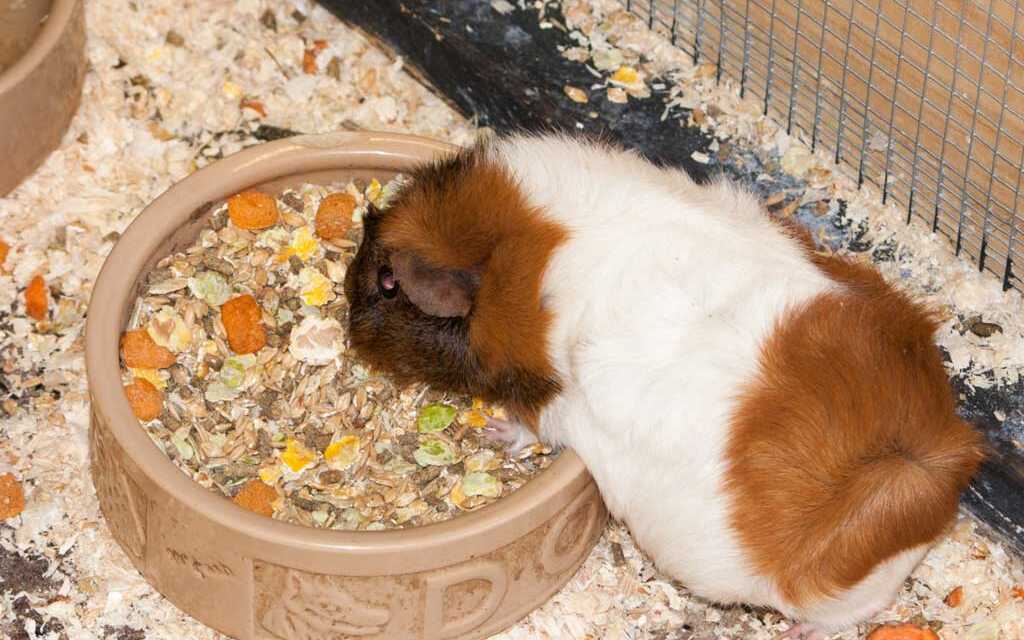
Feeding Your Guinea Pig
A pet, the guinea pig (cavy) is strictly herbivorous. It is therefore a rodent that must have a strict yet varied diet. Constantly moving its jaws, your guinea pig only eats plants and some specially designed extruded food for cavies. What kind of diet does your guinea pig need? Are there any foods that should be avoided? Follow our advice in this article.
Your Guinea Pig’s Diet
As a strict herbivore, the guinea pig only eats plants. Its diet mainly consists of hay, vegetables, herbs, and some fruits. These fresh foods are essential for its good health and cannot be replaced by industrial pellets.
A guinea pig should consume approximately 1/10 of its body weight in vegetables daily, along with hay as much as it desires. These two feeding methods complement each other and provide your guinea pig with the necessary nutrients for its well-being.
If these guidelines are followed correctly and the guinea pig’s food is stored away from light, there is no need to provide dietary supplements. If not, you can supplement your guinea pig’s diet with small additional nutrients.
What Are the Basic Foods for Your Guinea Pig?
Talking about basic foods means addressing your guinea pig’s daily nutritional needs. Even if you prepare your guinea pig’s food at home, you should ensure it meets its needs for carbohydrates, proteins, fats, vitamins, and minerals.
Hay, which forms the foundation of a guinea pig’s diet, should be provided in abundance and at will. Vegetables should make up about 1/10 of its total body weight. Hay is vital for your guinea pig because it helps wear down its teeth, prevents boredom, and supports healthy digestion.
- Providing Hay for Your Guinea Pig
Feeding your guinea pig means offering high-quality hay at all times. This allows it to wear down its teeth constantly and keeps its digestive system active. The hay should be rich in varied plants, grasses, and legumes. You can opt for Crau hay, as it is of high quality and carries the AOC label.
You can accompany the hay with fresh herbs (parsley, mint, etc.). The hay chosen for a guinea pig’s diet should be green, fragrant, non-dusty, and with long strands. Avoid using farm hay, as it is not recommended.
Store your hay in a dry place, away from light and moisture. Your guinea pig’s homemade diet should be based on hay, which is essential for its health.
- Providing Vegetables and Fruits for Your Guinea Pig
Vegetables and fruits should be introduced gradually into your guinea pig’s diet. Offer small amounts each time. They should be well-washed, dried, and at room temperature.
Vegetables and plants picked from nature should be rinsed with vinegar before being washed with water. Fruits can be given to guinea pigs, but in moderation, as they are high in sugar and can lead to obesity.
If your guinea pig develops soft stools or diarrhea, stop feeding it vegetables and fruits immediately and consult a veterinarian. Here is a list of fruits and vegetables you can offer your guinea pig:
- Tomato (without seeds)
- Squash
- Apple
- Banana
- Pineapple
- Clementine
- Kiwi
- Strawberry
- Melon
- Apricot
- Carrot (sweet, so in small quantities)
- Chinese cabbage
- Cucumber
- Endive
- Turnip
- Fennel
- Parsnip
- Bell pepper
- Salad (except lettuce)
- Radish and its leaves
- Eggplant (beware, leaves are toxic)
- Beetroot
- Broccoli
- Celery
- Providing Vitamin C to Your Guinea Pig
Vitamin C is crucial for your guinea pig’s digestive system to function properly. Therefore, you must provide vitamin C-rich foods.
Fresh vegetables and fruits such as oranges, bell peppers, and parsley are good sources. You can also give vitamin C supplements in the form of drops (diluted in drinking water) or chewable tablets (like candy).
Forbidden Foods for Your Guinea Pig
Many fruits and vegetables are harmful to your guinea pig’s health. Consuming them, even in small amounts, can cause digestive issues and, in some cases, be fatal.
For this reason, it is important to ensure that your guinea pig does not eat these foods. Also, avoid excess calcium and oxalic acid, as guinea pigs are sensitive to them. Too much of these substances can lead to kidney and urinary problems (calcinosis, stones), which could be fatal. The following foods should be avoided:
- Sorrel
- Rhubarb
- Spinach
- Beet leaves and beetroot
- Turnip leaves
- Swiss chard
- Chives
- Garlic
- Onion
- Leek
- Lettuce
- Chervil
- Summer savory
- Sage
- Fresh alfalfa
- Mesclun
- Mushrooms
- Carrot
- Asparagus
- Fig
- Date
- Plums
- Watermelon