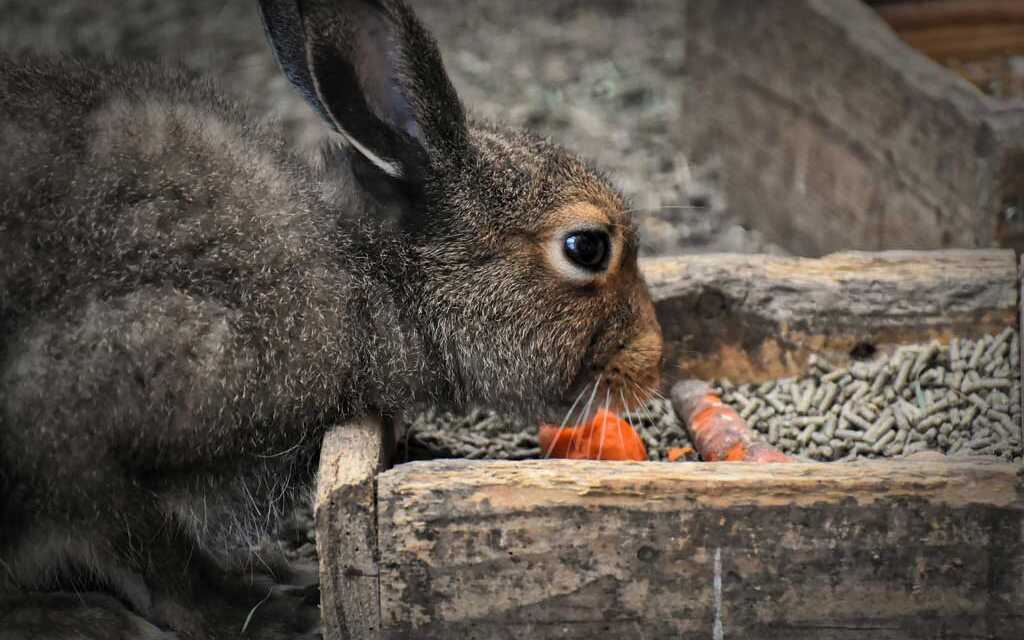
Feeding Your Rabbit
A true vegetarian, the rabbit is an excellent pet. In the wild, it feeds on grass, buds, leaves, and bark in winter. Once adopted as a domestic pet, it is essential to provide a balanced and healthy diet to ensure a happy life and good health.
The rabbit has a very sensitive digestive system. Therefore, a dietary mistake can lead to severe intestinal issues with potentially fatal consequences. A rabbit’s lifespan depends on its health.
Speaking of health, it involves regular physical activity and a healthy, consistent diet. That’s why it is important to know how to feed your rabbit properly to ensure good health as it ages.
Rabbit Nutrition
Rabbits eat throughout the day and nibble at night. Thus, they need a significant amount of dietary fiber daily. You can add some plant-based proteins but in moderation.
Vitamins and minerals are found in the grass and hay that you continuously provide. With its highly specialized digestive system and teeth, the rabbit is adapted to a very specific type of diet.
Rabbits do not tolerate inappropriate foods well. A baby rabbit’s diet consists of hay, dried or fresh herbs, vegetables, and pellets. Be careful with the quantity.
Basic Foods for Rabbits
A domestic rabbit’s diet is not complicated if you understand its dietary needs. As a rodent, its diet consists of hay, pellets, herbs, and vegetables.
- Give Your Rabbit Hay
Rabbit food mainly consists of hay because it has many benefits. It contains fiber, which helps with waste transit in the intestines and prevents intestinal blockage.
As a staple of a rabbit’s diet, hay prevents weight gain and helps wear down its teeth. Rabbits can chew on hay for a long time, keeping them occupied. Good hay is green, fragrant, and free of mold and dust.
Hay comes from grasses such as timothy and oat hay. You can also add a few dandelion flowers for extra nutrition. If a rabbit refuses hay, it may not like the taste.
Rabbits often eat hay after relieving themselves. Where should you place the hay? Simply put it near your rabbit’s litter box to prevent it from mixing with waste.
- Give Your Rabbit Fresh Vegetables
Rich in water, fresh vegetables help hydrate the rabbit’s intestines and improve digestion. Suitable vegetables include cabbage leaves, celery, radish tops, and green bell peppers.
Some vegetables rich in vitamin A, such as carrots, mustard greens, and broccoli, are also important for a rabbit’s diet. However, they should be given in moderation to avoid upsetting its delicate digestive system.
Vegetables can cause diarrhea in rabbits, especially if mixed excessively. Occasionally, you can add fruits to their diet, but be cautious as they are high in sugar. Avoid lettuce as it is difficult for rabbits to digest.
- Give Your Rabbit Grass
Like hay, grass is also a staple in a rabbit’s diet. It should be available regularly in its food bowl. Chewing grass helps rabbits wear down their teeth.
- Give Your Rabbit Pellets
Pellets are nutrient-rich and contain everything necessary for your rabbit’s health. However, they are high in calories and low in fiber, so excessive feeding can lead to obesity and overly long teeth.
Use uniform pellets (extruded) rather than mixed ones, as rabbits may pick out only the tastier, low-calcium ingredients. Prefer timothy-based pellets over alfalfa-based ones.
Additional Foods
As supplementary foods, you can give your rabbit small amounts of various vegetables, such as oregano, nettles, parsley, dandelion, bell peppers, thyme, Jerusalem artichokes, carrots, celeriac, Brussels sprouts, cauliflower, spinach, radish leaves, sunflower leaves, and green beans.
For treats, fruits are commonly given, but they are sugary and can cause weight gain. Limit the quantity and be mindful of potential toxicities.
Rabbit Breeds and Their Diets
There are many rabbit breeds. Here are the dietary needs of some of them.
- Diet of a Lop Rabbit
Lop rabbits, with their long ears, are herbivores like other rabbit breeds. Sociable and calm, they require fiber, vegetables, fruits, and kibble. Daily fiber intake is essential for proper intestinal function.
Provide fresh hay daily, as it is rich in fiber. It should be available at all times to support proper digestion.
Vegetables should make up about 50% of their diet. Suitable options include carrots, endives, escarole, watercress, radish leaves, artichokes, spinach, and cabbage. Avoid giving them garlic, leeks, onions, and lettuce.
The fruits include cherries, pineapple, apple, melon, pear, watermelon, and mango. Fruits to avoid include avocado, grapes, plums, and citrus fruits. Water should be available at all times and must not be missing from your rabbit’s cage.
- Diet of a Dwarf Rabbit
The diet of a dwarf rabbit, like all other rabbit breeds, generally consists of plant-based foods such as leaves, herbs, flowers, plants, and buds. A domestic rabbit’s diet does not include seeds because it is not a granivore.
Since they eat fresh plants and dried herbs, you can give your dwarf rabbit hay or alfalfa. Rich in magnesium, phosphorus, and calcium, hay is very important in a dwarf rabbit’s diet. There are four types of hay available for your pet: meadow hay, alfalfa hay, second-cut hay, and premium pasture hay. Alfalfa hay is only suitable for baby rabbits. Give it freely, and you can use it as a treat. You can supplement it with fresh vegetables (lettuce, carrots, cabbage, chopped herbs, fruits, radish tops, beets, and spinach).
For complementary foods, you have fresh vegetables rich in vitamin A (asparagus, carrots, watercress, celery) and fruits (banana, cherry, apple, apricot, melon, blackberries, etc.).
Avoid giving your dwarf rabbit foods such as broccoli, artichokes, cabbage, peas, lettuce, bread, rusks, breakfast cereals, cookies, snack biscuits, pasta, chocolate, dairy products, and corn.
- Diet of a Wild Rabbit
While domestic rabbits are slightly different from wild rabbits, their diets are quite similar. A wild rabbit also feeds on plants, herbs, leaves, and buds. They are herbivores, not granivores.
Therefore, avoid giving them seeds. Hay is an essential part of their diet. It should be very green, of good dry quality, with long fibers and not overly dried. You can vary it with organic alfalfa.
Fruits, vegetables, and pellets are also recommended for wild rabbits. Give them fresh vegetables (about 50 to 100 g per kilogram of body weight). Since fruits are sugary, they should be limited and used as treats for your wild rabbit.
Pellets should contain a good amount of fiber, proteins, a little fat, and low calcium (1%). The feeding frequency for your wild rabbit should depend on its activity level and body condition.
How Often Should You Feed Your Rabbit?
Since rabbits eat constantly throughout the day and tend to nibble more at night, they should have unlimited access to hay and grass. However, if you choose to give pellets, make sure not to exceed two tablespoons per day.
What Foods Are Forbidden?
Some foods that humans consume are harmful to rabbits. These toxic foods can cause diarrhea and may even be fatal. Avoid giving them to your rabbit.
These include rhubarb, garlic, potatoes, onions, hazelnuts, soy, sorrel, peas, sage, sweets, dairy products, packaged cereals, canned fruits, decorative plants, and bread (which is too fatty).