Horse Training
Having a horse at home serves a specific purpose. People decide to acquire a horse for farm work, riding, and other activities. During these different activities, the animal must be able to meet your requirements.
Therefore, you need to train your horse. With this training, you will be able to communicate better with your horse. Proper training makes the horse obedient, easy, and pleasant to control during your various activities.
Taming your horse requires patience and understanding. Since the animal is not a robot, it cannot immediately respond to your requests. How do I train my horse?
How to tame a horse?
On a farm, agricultural work is demanding, so the animal must be precise, attentive, and powerful. It is therefore important to train the horse so that it is efficient in your various tasks.
Training an animal means knowing its strengths and weaknesses. There are several methods to train a horse. Each person does it based on their experience, available equipment, and the horse’s reaction.
Each horse is unique. Here are some methods to help you train your horse for farm work, riding, and other activities.
Some basic principles of training
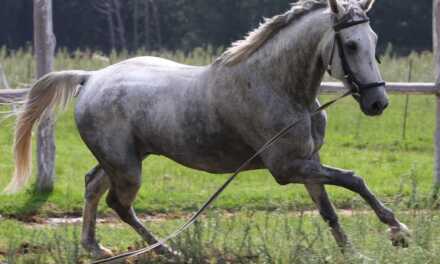
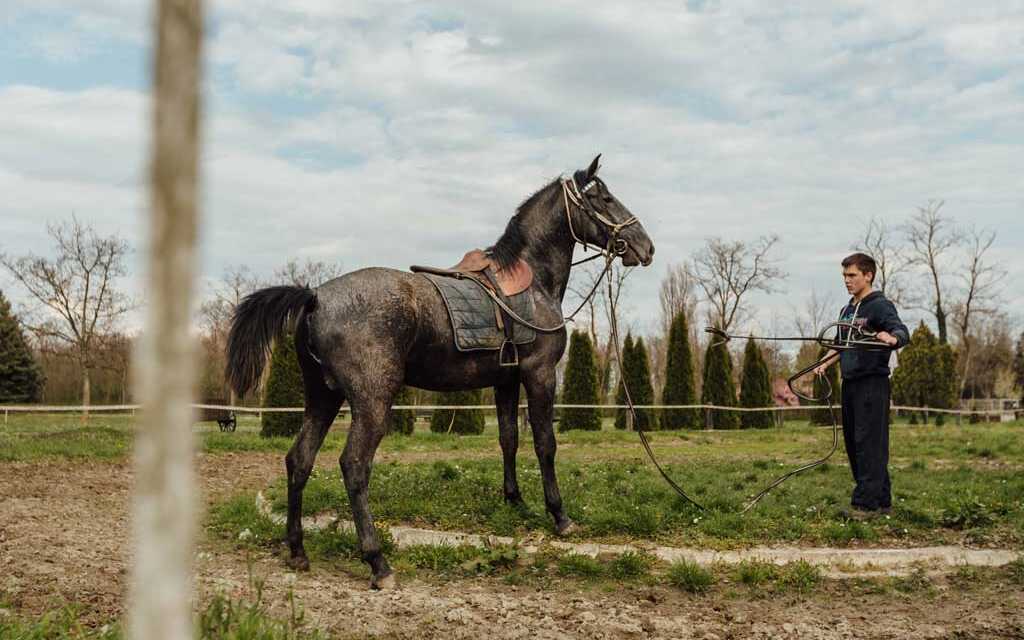
To train a young horse when it first leaves the pasture, a basic exercise is needed to get it moving. Have it do lunging circles. You should make your horse walk along the fence until it starts understanding basic commands. With this exercise, you establish a connection with the horse and understand its personality. After this small exercise, you can now begin your horse’s training.
Starting the training
The trainer should stand in the center of the circle to manage the horse’s trust, direction, and speed. Always start with pressure. To make the horse move forward, take a step outside the center and direct your focus towards its hindquarters.
As soon as the horse moves forward, immediately release the pressure by returning to the center of the circle. Another exercise is when you want the horse to follow you—take a step while focusing the horse’s attention on your chest.
As soon as it looks at you, immediately release the pressure by stepping back. After several repetitions, the horse will understand your requests. Be quick in releasing the rope so the animal understands your approach. Always be timely to succeed in training.
Training a horse with vocal commands
A horse has four speeds: halt, walk, trot, and gallop (not used in fields). When you want the horse to move from halt to walk, simply say “marché” while emphasizing the “ché” sound. Conversely, to stop from walking, say “oh!” while emphasizing the “là” sound.
You can name your horse and use its name during verbal training. The most important thing is to remember the hierarchy of phrases used in training. Always start with voice commands. If nothing works, you can resort to physical contact. Here are the steps to follow in order:
- Voice
- Positioning (shoulder orientation)
- Movement
- Hand or head gestures
- Arm gestures
- Clapping or foot stomping
- Contact
How to bond with a horse?
Horses are affectionate and loyal animals. You should spend more time with your horse, showing it that it can trust you. Once this trust is established, the horse will respond to all your requests. To bond with your horse, follow these steps.
– Introduce yourself to your horse
- Let the horse make the first move
- Talk to your horse (sing, read texts, etc.)
- Go slowly (understand the horse’s body language)
- Blow into the horse’s nostrils as a greeting
- Give your horse treats
- Be patient (bonding varies from horse to horse)
– Handling your horse
- Prepare the environment (teach it to obey and build its trust in you). Take walks.
- Be the leader: train it to move (go right, left, stop, back up, etc.)
- Be firm and consistent: do not give in to its whims
- Learn the horse’s body language: since it cannot speak, it expresses itself through its body.
- Loosen the reins: once the bond is established and you can ride, the horse will follow your movements.
– Training your horse using ethology
To train your horse using ethology, here are some useful steps:
- Work while respecting the horse’s behavior and cognitive abilities
- Properly apply learning theory
- Establish clear and distinguishable signals
- Gradually shape responses and movements
- Teach one response per signal
- Establish habits
- Encourage consistency in responses
- Avoid and separate flight reactions
- Train when the horse is calm