How to lunge your horse?
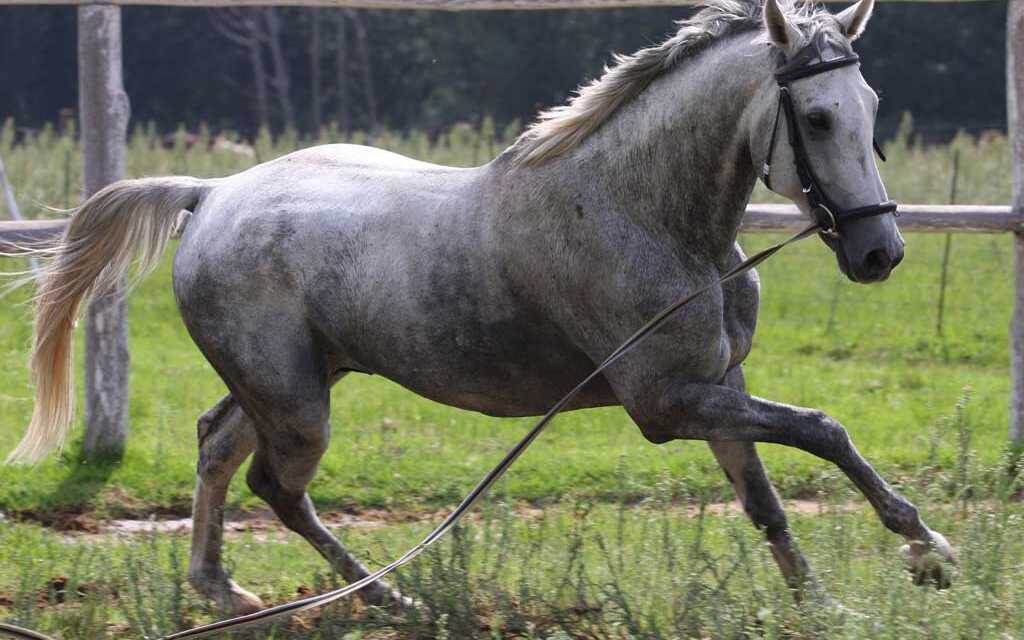
Lunging is the foundation of a horse’s training and also an excellent exercise. To learn how to lunge your horse, you need certain equipment essential for this exercise. These include protective gear, a lunge line, a bridle or halter, a lunge pen or field, a lunge whip, a surcingle, and auxiliary reins. Once you have these different tools, you can now lunge your horse. How to lunge your horse?
Learning to lunge your horse
Wanting to lunge your horse means having knowledge of some techniques. Mastering these different techniques can help you lunge your horse more effectively.
The different techniques for lunging your horse
Once you hold the lunge line, avoid wrapping it around your fingers. Instead, let it move back and forth in your hand. For the remaining part of the lunge line in the other hand, hold it between your thumb and index finger.
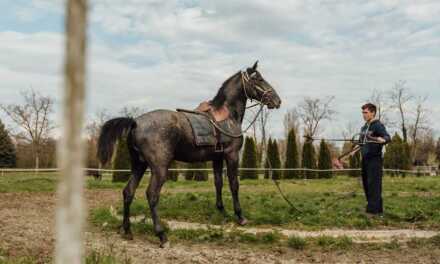
Stand in the middle of the circle you want your horse to follow. Create a triangle where you are at the top, and the two other sides are your whip and the lunge line. This allows you to vary your horse’s posture at any moment.
If you want to speed up the horse, simply position yourself towards its hindquarters. To slow it down, move towards its forehand. To maintain a steady pace, stay aligned with the surcingle. Horses interpret body movements a lot.
Lunging your horse properly also involves using your voice during the exercise. Use a unique set of vocal commands—one that helps identify a specific movement. Vary your tone (soft or firm).
Regarding the lunge whip, you should use it only when necessary. If you don’t need it, shake it or move it towards the horse without actually hitting it.
Learning to lunge your horse requires caution and self-control. So, before starting, we recommend watching someone do it first or seeking help from an experienced person.
Lunging a horse with a halter
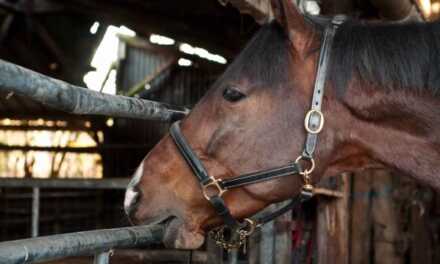
Lunging your horse with a halter helps protect its mouth, and this should be a priority when lunging your animal. Keep in mind that all horse breeds can be lunged with a rope halter, even the most difficult and energetic horses. The halter has the advantage of being gentler and not acting on the horse’s mouth.
You can attach the lunge line to the lower ring, which makes changing directions easier. You can also attach it to one of the rings on the side.
This helps promote proper bending. The halter should be fitted properly to prevent it from turning and injuring your horse. Instead of a halter, you can use a bridle or a cavesson.