
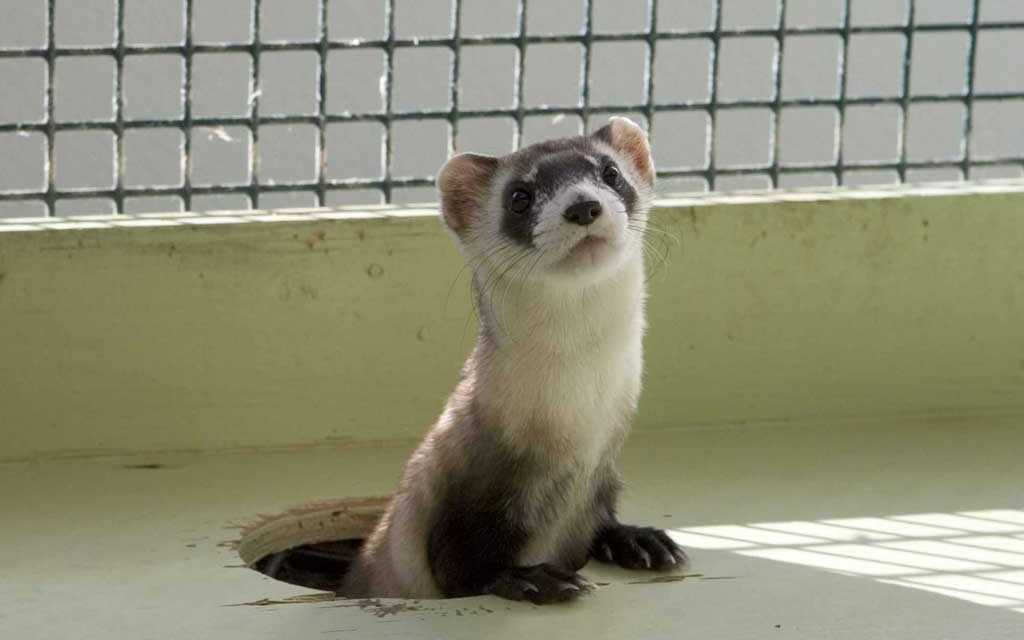
Belonging to the mustelid family, the ferret is the only one of this family that is raised as a pet. It is an animal that no longer exists in the wild. Therefore, it needs humans to live.
Adopting a ferret means being able to provide it with a pleasant living environment. A space that allows it to sleep and play. An active and lively animal, it needs a spacious area with multiple compartments.
That is, a place to eat, another for its needs, one for resting, and so on. Therefore, choosing a ferret cage is very important. What kind of cage is best for my ferret?
The location of the ferret’s habitat: indoors or outdoors
At home, your ferret can live either outdoors or indoors. Regardless of the space you choose, make sure your pet is protected from drafts and heat.
The place where you put the ferret cage should have a temperature above 15°C and below 24°C. Since they enjoy light, make sure they get enough of it. You should therefore think about both the positioning and the setup of your ferret’s cage. As a ferret sleeps between 10 to 15 hours a day, it needs a very quiet space.
Outdoor ferret cage
Outside your home, you can set up a large outdoor ferret cage for your pet. This allows it to live more naturally—running, jumping, and covering long distances for its well-being.
If you are choosing a cage for a ferret, you need one with minimum dimensions of 1 meter in length, 50 cm in height, and 50 cm in width. The size of the ferret cage should vary depending on the number of ferrets you adopt.
For the height, avoid making the cage too high, as your ferret could climb and fall. The floor surface is very important. It should allow your pet to move around freely. What type of outdoor cage should you get for your ferret? You can build:
- An outdoor ferret enclosure
With this open-air outdoor enclosure, your pet will be very happy. However, you must take certain precautions. Ferrets are animals that dig. A poorly installed enclosure could result in your ferret escaping. To prevent this, place mesh on the ground.
Make sure your ferret cannot pass through the mesh. The layout of your outdoor enclosure should ensure protection from drafts, cold, and heat. Before setting up this enclosure, check with local authorities to see what is allowed in your area.
- A ferret hutch
There are several models of ferret hutches. Some are made of wood, plastic, aluminum, and other materials. They come in various sizes, from small to large.
A hutch is essential for ensuring your ferret’s well-being. The dimensions of the hutch depend on the number of ferrets you plan to keep. The larger the hutch, the more comfortable your pet will be.
Large XL or XXL ferret hutches are ideal. Spacious, these hutches have multiple levels. Your pet will have plenty of room to run and jump. They can also hold all the necessary accessories for your pet.
Large XL or XXL ferret hutches are available in plastic and wood. Wooden hutches are more comfortable. They are practical, easy to handle, and hygienic.
What materials should I choose for my ferret’s cage?
On the market, you will find ferret cages made of wood, plastic, metal, and plexiglass. Those made of plastic or plexiglass are not ideal for your ferret’s well-being.
These cages prevent proper air circulation, which can cause respiratory issues for your pet. Wooden ferret cages should also be avoided, as wood absorbs urine and can develop a bad odor.
Additionally, proper cleaning is difficult. Avoid aquariums and terrariums as well. The best material is metal. Choose metal cages with tightly spaced bars to prevent your ferret from getting injured.
Setting up a ferret cage
Setting up a ferret cage means creating different areas: a resting area, a feeding area, a play area, and a bathroom area. The resting area should be comfortable, warm, and quiet since ferrets sleep between 10 to 15 hours a day.
You should also provide accessories such as a water and food bowl, a litter box, a hammock, straw, tunnels, a cat tree, and play mats. For your ferret’s safety, it is important to have a cage with a secure locking system.
Ferret transport cage
For transporting your ferret while traveling by car, plane, boat, etc., you can use either a transport crate or a transport bag. A cat transport crate is suitable for long distances. You can add litter, water, a blanket, and food. For walks, we recommend a transport bag.
Used ferret cages for sale or donation
You can find used ferret cages for sale on the market. They come in various sizes and materials. They are cheaper than new cages, allowing you to provide your ferret with an ideal space for its well-being.
When buying your pet, you can opt for a ferret that comes with a donated cage. This ensures you get a cage suited to the size of your pet.
Homemade ferret cage
It is possible to build your ferret’s cage at home if you have the materials and tools. Ensure the cage is sturdy and spacious. It should have wire mesh with appropriate spacing for your pet’s safety. To make cleaning easier, you can install tiles or linoleum.
Affordable ferret cage prices
The price of a ferret cage varies based on specific criteria: size and material. You can find affordable ferret cages on the market, depending on their quality and durability.
The lifespan of a ferret cage is often linked to its price. It is possible to get a cage starting at 100 euros.