In general, ferrets are very clean domestic animals. Therefore, you should set up several areas in their cage to meet their different needs, such as spaces for food, rest, and more.
A litter box is essential for them to relieve themselves. Unlike cats and rabbits, ferrets do not have the habit of using the litter box instinctively.
On the one hand, you must teach them to use the litter box while also providing one that suits them. What kind of litter should you choose for your ferret?
How to train your ferret to use the litter box?
Training your ferret to use the litter box is very important. You can place multiple litter boxes in their cage, around your home, or along their usual paths.
Teach them to systematically go to their litter box whenever they need to relieve themselves. Be sure to maintain the cleanliness of their litter box, as ferret waste emits ammonia odors that, over time, can become toxic.
Which litter box for your ferret?
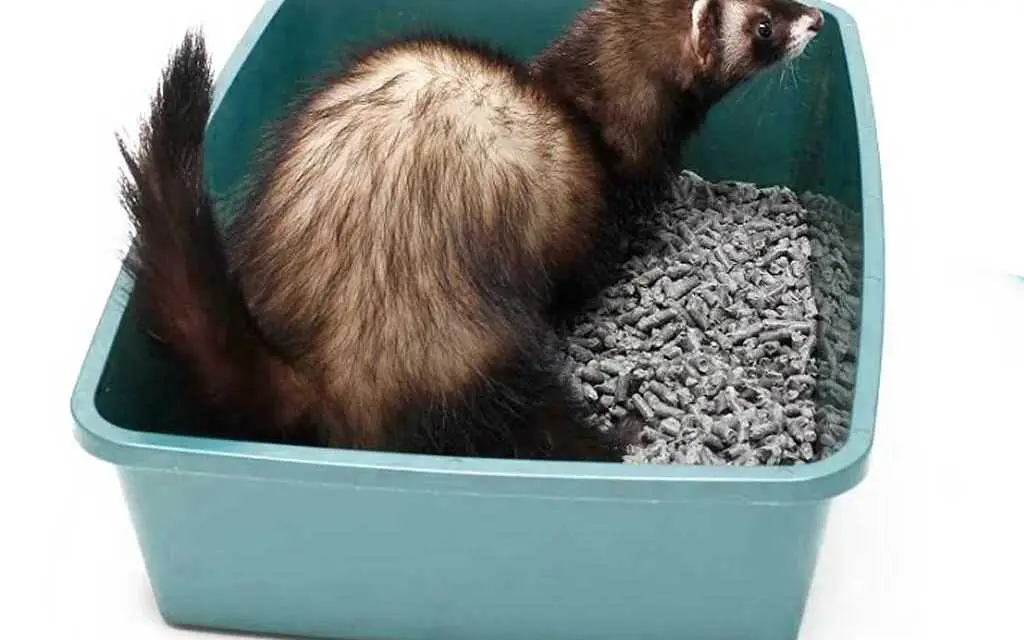
You have the option to choose between different types of litter boxes, such as cat litter boxes or special ferret litter boxes. Cat litter boxes are not always suitable for ferrets. You can also use a plastic container like a builder’s trough or a basin. Choose a litter box with edges that are appropriate for your ferret’s size.
Choosing the right litter for your ferret
There are many types of litter available on the market. You can choose based on your preferences and budget.
- Hemp litter for my ferret
This is ideal for your ferret. Non-toxic, hemp litter has many advantages. Since it is not volatile, it does not produce dust. While it is a great option for ferrets, it can be quite expensive.
- Vegetable litter for your ferret
Biodegradable, it can be easily disposed of in the toilet. It is non-toxic and perfectly safe for your pet. This type of litter absorbs odors. Like all other litters, it must be changed regularly. Its downside is that it can be somewhat dusty and relatively expensive.
- Corn litter for your ferret
This is one of the most commonly used types of litter. It provides great comfort for your pet. Highly absorbent and non-toxic, corn litter does not produce dust. However, corn grains may scatter around when ferrets dig. Additionally, it is relatively costly.
- Flax litter for your ferret
Flax litter has the same properties as hemp litter. It is non-toxic, does not produce dust, and is non-volatile. However, it is rarely used for ferrets.
- Newspaper as litter for your ferret
Using newspaper as litter is very economical. However, since it is not absorbent, it must be replaced daily, which can be tiresome.
- Cotton litter for your ferret
Soft and pleasant for your ferret’s paws, this type of litter helps neutralize bad odors. It also has good absorbency but requires frequent cleaning. However, it is generally difficult to clean.
- Cellulose litter for your ferret
Like vegetable litter, cellulose litter is biodegradable but not widely used. Made from compressed cellulose fibers, it is absorbent and dust-free. Soft to the touch, it is ideal for your ferret’s paws. Its main drawback is that it is expensive.
Which types of litter should you avoid for your ferret?
- Straw litter
Due to its sharp strands and excessive dust production, straw litter is not recommended for ferrets. Moreover, it has poor absorbency.
- Wood shavings litter
Highly dusty, this type of litter is harmful to the animal’s respiratory system. When it comes into contact with urine, it releases toxic molecules (phenol), which are very dangerous for ferrets. Avoid using this for your pet.
- Scented litter
While it can help mask unpleasant odors from ferret waste, scented litter emits fumes that can be highly toxic. It is best to invest in high-quality litter rather than low-end alternatives that might cause health issues for your pet.
What is the cost of litter?
Since they have different characteristics, litters also vary in price. Some are more expensive than others.