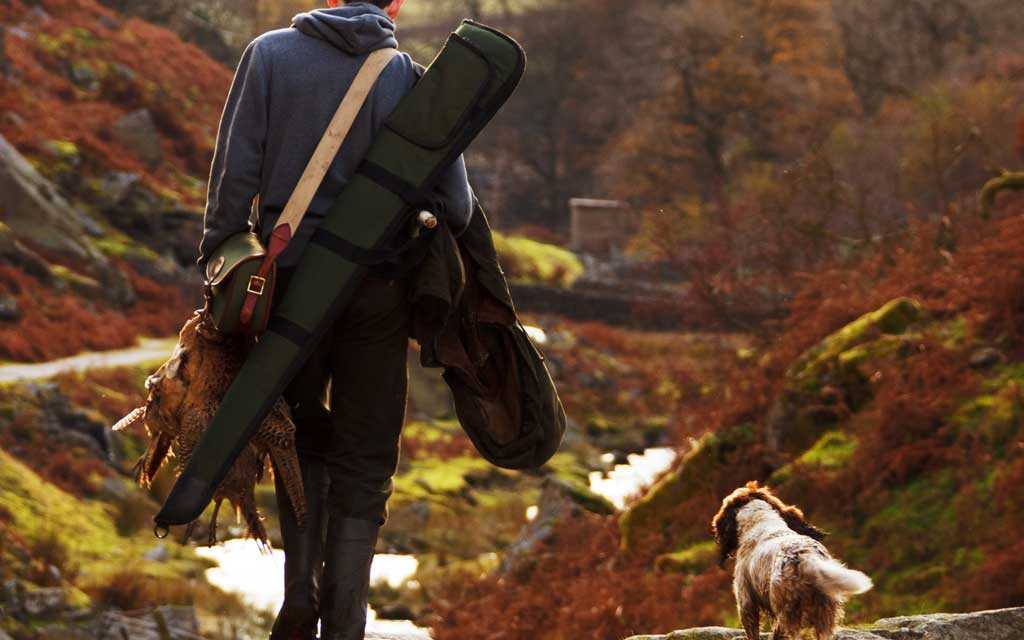
Mammal of the canine family, the dog is a faithful companion to humans. Originally a carnivore, it has adapted to the omnivorous diet of humans. The dog is therefore used by humans for various purposes, such as surveillance, hunting, demining, etc. It has become impossible for humans to go hunting without the presence of a dog.
Acquiring a hunting dog is a big decision. The perfect hunting dog must have certain qualities to be useful during your different hunting sessions. Therefore, it is essential to choose the dog that ideally meets your objectives. How do you choose a hunting dog?
How to choose your hunting dog?
Several criteria must be taken into account when choosing a hunting dog. It is important to know the breed of your hunting dog, its skills, the behavior of its parents, and other criteria. The most important aspect is to consider the personality of each dog individually. There are many breeds of hunting dogs.
- The Pointer Dog
With short, hard, fine, smooth, and shiny fur, the Pointer dog is generally bicolored, with a moderately broad skull and fine, medium-length ears set high, ending in slight points. With a gaze that is never evasive, the Pointer dog has hazel or brown eyes.
A French hunting dog, it has a long tail and a medioligne body structure. It is an excellent pointing dog, fast, agile, flexible, and very lively. With a very keen sense of smell and an excellent companion for family life, the Pointer dog thrives in hunting environments. It is easy to train because it possesses great intelligence.
- The Dutch Dog
A hunting dog for waterfowl, the Dutch dog is full of energy, calm, gentle, attentive, and also very affectionate. It has medium-length, slightly wavy but not curly fur, a muzzle that is not too high, ears set high, a horizontally carried tail, and is a cheerful hunting dog that is very independent from its owner and loves family life.
A perfect companion dog, it is sociable and requires a lot of attention. Sensitive, it is a waterfowl hunting dog that does not appreciate noise and shouting. It loves children but dislikes excessive handling. Easy to train, it is a hunting dog that learns quickly but does not appreciate yelling or abruptness during training sessions. It enjoys encouragement and rewards and requires daily care.
- The Gascon Saintongeois
A large dog (65 to 72 cm), the Gascon Saintongeois is a hunting dog. It has short and dense fur, oval-shaped brown eyes, thin folded ears set below the eye line, and a white body with black spots.
With a strong tail that tapers at the end, the Gascon Saintongeois is affectionate, playful, calm, intelligent, a big game hunter, and also a hare-hunting dog. A sociable dog, it dislikes solitude. Easy to train and a hunter’s dog, it has a deep voice that it uses while working. The Gascon Saintongeois needs space to feel comfortable.
- The Swiss Hound
With thick, short, and hard fur, the Swiss Hound is tricolor (white and black with pale or intense tan markings). There are several varieties of Swiss Hounds, and they do not all have the same colors. An affectionate hound, attached to its owner and family members, it is an indefatigable companion dog.
Intelligent, it tolerates solitude and is a hare-hunting dog. Used for hare hunting, it has an extremely keen and reliable sense of smell and a powerful voice that it uses during the hunt. It is a very welcoming hunting dog that works independently.
- The Italian Hound
With an elongated head, large and bright eyes, drooping, triangular, wide, and flat ears, well-muscled, dry, and long limbs, a high-set, slender, thin tail carried in a saber shape, the Italian Hound has short fur and a fawn-colored coat in all its shades or black and tan.
It is an affectionate hound that rarely shows its emotions. A hare-hunting dog, it is a true worker and can seem very distant. It is a hunting dog that dislikes solitude. With a perfectly resonant voice, it may run away if its environment is not secure and its exercise needs are not met. It can also be a perfect guard dog.
- The Bernese Hound
A medium-sized hound with smooth, short, and dense fur, an elongated and narrow skull, medium-sized oval eyes ranging in color from light brown to dark brown, the Bernese Hound has a white coat with spots or a black saddle marked with fawn (from light to dark).
A highly competent, courageous, and tireless hunting dog, the Bernese Hound has fairly large ears that reach the tip of its nose and a medium-sized tail. It is capable of working in the most challenging terrains. A hare-hunting dog, which is its specialty due to its highly developed sense of smell and liveliness, it is naturally obedient.
- The Beagle
A small and very graceful dog with a height of less than 35 cm, the Beagle is characterized by round and lively eyes, fairly long ears, a thick tail well-covered with fur, and short fur. A French hunting dog, it is an affectionate animal with a kind and cheerful temperament.
A very alert and playful hunting dog, it is a perfect companion, very enthusiastic in making contact. If you are looking for a calm dog, the Beagle is not the right choice, as it is not known for its tranquility.
However, if its various needs are met, it can remain calm and rest. Intelligent, it has a highly developed hunting instinct. However, it is not an easy dog to train and has a rather loud and insistent bark that attracts everyone’s attention.
- The Griffon Korthals dog
A pointing dog that uses its sense of smell for hunting game, the Griffon Korthals hunting dog is medium-sized, with a head that has a gruff but endearing expression. It has short, hard, and rough hair of gray color speckled with brown, a softer undercoat, thick mustaches, and large round eyes ranging from brown to dark yellow.
An tireless hunting dog, it has a highly developed instinct and especially needs space. The Griffon Korthals, a French hunting dog, loves walks in the forest and the countryside. The Griffon Korthals is a dog with rather good health.
- The Munsterländer dog
An excellent hunting dog, the Munsterländer is also a good companion dog. It is characterized by a flat and dry skull, medium-sized dark-colored eyes, ears that do not detach from the head, and a medium-long, relatively thick, and waterproof coat that is smooth or wavy.
The Munsterländer, which is a French hunting dog, has dense fur that provides protection against injuries, bad weather, and the environment. Disliking solitude, it needs a constant human presence.
It is especially recommended for people who rarely leave their home and also those who work from home. It is also an obedient, intelligent, and sturdy hunting dog.
- The Porcelaine dog
A French hunting dog, the Porcelaine is a very distinguished dog. It is characterized by short, fine, tight, and shiny fur, with no part of its body being hairless. A hunting dog, it has a white coat with round-shaped orange spots.
The Porcelaine dog is very active and is also a utility dog that generally lives outdoors and in packs. Not too affectionate, it could become so if raised at home as a sporty companion dog.
Calm when at rest, it becomes very active during sports or hunting sessions. Intelligent, it is a hunting dog that takes great initiatives. As a scent hound, it is easy to train as long as its needs are met. It has a very strong prey call and is also a good guard dog.
- The Portuguese hunting dog
Called the “Podengo Português,” the Portuguese hunting dog is remarkable for the energy it brings to its activities. A very old hunting dog, it is characterized by short and hard fur. An tireless companion, lively, fast, and intelligent, it is a pet that brings happiness to active families.
Strong-willed, it is important for its owner to establish its place through rigorous training, which should be done with patience and kindness. The Portuguese hunting dog does not tolerate solitude and needs a lot of daily activity.
- The Spanish hunting dog
Called the “Spanish Greyhound,” the Spanish hunting dog is perfectly suited for hunting. A hare-hunting dog, it has good musculature and an elegant silhouette. It is a hunting dog characterized by a slender and elongated head, a deep chest, a well-tucked-up belly, and a long tail that curves downward like a sickle when at rest.
In adulthood, it focuses its attention on its owner. It is an affectionate, playful, and serious companion animal that does not impose itself. It has short fur that needs to be brushed once a week.
Which dog is best for lion hunting?
The lion-hunting dog is the Rhodesian Ridgeback. A hunting dog, it is strong, muscular, lively, resilient, and fast. With a systematic build, it is characterized by a long head, a flat skull, a long, deep, robust muzzle, and a well-defined stop.
A dog with short, thick, smooth, and shiny fur that is neither silky nor woolly, it has round, bright eyes that match its coat color. The Rhodesian Ridgeback has a coat ranging from light wheaten to red wheaten, with some white on the chest and toes. Playful, it is sporty, dynamic, and also enjoys moments of rest at home. It is the ultimate versatile lion-hunting dog. Intelligent, it is a companion dog, a hunter, and also a guard dog.
Is a dog effective against rats?
Rat-hunting dogs exist because dogs are natural predators of rats, mice, and other rodents that may be around us. Rat-hunting dogs are capable of destroying rat tunnels to flush them out. With their highly developed sense of smell, they can detect hidden rats.
Which Long-Haired Hunting Dogs Exist?
You want to adopt a long-haired hunting dog. Be aware that there are several breeds of long-haired hunting dogs. However, if you adopt one, it will be important for you to ensure that it is enduring, athletic, and tenacious. Here are some breeds of long-haired hunting dogs:
- Griffon Nivernais
- Podenco Ibicenco
- Otterhound
- Kaninchen Dachshund
- Skye Terrier
- Finnish Spitz
- Finnish Lapphund
- Soft-Coated Wheaten Terrier
- Wachtelhund
- Briquet Griffon Vendéen
Which Red-Haired Hunting Dogs Exist?
Generally, hunting dogs resemble each other in attitude but differ in coat color. Here are some names of red-haired hunting dogs:
- Kaninchen Dachshund
- English Cocker Spaniel
- Nova Scotia Duck Tolling Retriever
- Bavarian Mountain Hound
- Finnish Spitz
- Italian Hound
- Norfolk Terrier
- Redbone Coonhound
- Tyrolean Hound
- Alpine Basset
- Tyrolean Hound
Which Small Hunting Dogs Exist?
In general, small hunting dogs are scenthounds, burrowing dogs, or tracking dogs. There are many, so here are the names of a few:
- Kaninchen Dachshund
- Skye Terrier
- English Cocker Spaniel
- Norwich Terrier
- Drever
- Lakeland Terrier
- Small Dutch Waterfowl Dog
- Fox Terrier
- Sussex Spaniel
- American Water Spaniel
- Norrbottenspets
- Boykin Spaniel
- Manchester Terrier
- Finnish Spitz
- Wachtelhund
Which Large Hunting Dogs Exist?
Large hunting dogs can be used as scenthounds, pointers, or retrievers, meaning they fetch game. There are many, so here are the names of a few:
- English Setter
- Poitevin
- Gordon Setter
- Hungarian Greyhound
- Grand Bleu de Gascogne
- Bloodhound
- Grand Anglo-Français Tricolore
- Gascon Saintongeois
- Grand Anglo-Français Blanc et Noir
- Otterhound
- Sloughi
- Podenco Ibicenco
- Braque Dupuy
- Polish Greyhound
- Irish Wolfhound
What Is the Difference Between a Pointing Dog, a Tracking Dog, and a Trail Dog?
Each hunting dog breed has its own unique qualities, which they showcase during hunting.
The Pointing Dog
The pointing dog has the ability to freeze in place when it spots prey. It waits for its owner’s command before moving forward to pursue the animal. Pointing dogs can also be trained to retrieve and track game.
They are essential for tracking small feathered or furred game. A woodcock pointing dog must be conditioned to detect indirect scent traces left by the bird. The woodcock pointing dog must learn to hunt woodcock from an early age. Examples include setters, pointers, spaniels, Labradors, and Golden Retrievers.
The Trail Dog and the Tracking Dog
The trail dog is a true athlete. It is capable of picking up even the faintest scents. A trail dog can also be a good tracking dog. The difference between the two is that a tracking dog remains silent while working on a leash, whereas a trail dog barks when it picks up a scent. A good tracking dog is also a trail dog. The tracking dog works on a leash and remains silent.
What Are the Different Colors of Hunting Dogs?
A hunting dog can have various coat colors:
- Blue: The Bleus de Gascogne are elegant and distinguished scenthounds.
- Gray: The Weimaraner is a gray hunting dog with short, thick, and dense fur.
- Brown: Many hunting dogs are brown, including the Miniature Dachshund, Lakeland Terrier, Bloodhound, Griffon Fauve de Bretagne, Airedale Terrier, etc.
- Brown and White: Several brown-and-white hunting dogs exist, such as the Basset Hound, Beagle, Hygen Hound, Drever, Jack Russell Terrier, English Setter, etc.
- Black: Many hunting dogs are black, such as the Jagdterrier, Patterdale Terrier, Karelian Bear Dog, Smooth-Haired Dachshund, etc.
- Black and White: Several black-and-white hunting dogs exist, including the Basset Hound, English Cocker Spaniel, English Setter, English Springer Spaniel, Pointer, etc.
Training a Hunting Dog
Man’s best companion, the hunting dog, needs to be trained beforehand to accompany you on hunting trips. During this training period, patience and consistency are essential.
It’s important to know that not all dogs can be trained for hunting. You should choose dogs that are at least six months old. They must have already undergone basic training to respond to common commands. For hunting dog training, you need to focus on:
- Breaking-in: An essential step where the dog learns to obey your voice.
- Retrieving: This involves teaching your hunting dog commands like “take, carry, and give.”
- Gunshot Training: Getting your dog accustomed to gunfire so it associates the sound with a command. You can start with a toy cap gun.
Hunting Dogs for Sale
To sell a hunting dog, certain procedures must be followed. It is illegal to sell a puppy under eight weeks old. You must provide:
- Your SIREN number, which must be mentioned in the sales ad
- A transfer certificate
- A document providing all information about the dog
- A veterinary certificate attesting to the dog’s good health
- The dog’s identification document